
Master the Secrets of Successful Investing in Stocks: Boost Your Financial Confidence

successful investing in stocks

Introduction: Embarking on Your Journey to Successful Investing in Stocks

Investing in the stock market can be intimidating, especially for those new to finance. The fear of losing money, the complexity of financial jargon, and the constant market fluctuations can deter many potential investors. However, history has shown that anyone can learn to navigate the market and build a thriving portfolio with the right knowledge, strategies, and mindset.

Take the example of Warren Buffett, one of the most successful investors ever. Buffett started investing at 11 and has since amassed a fortune of over $100 billion. His success can be attributed to his disciplined approach, long-term perspective, and ability to identify undervalued companies. Buffett’s journey demonstrates that successful investing in stocks is not about timing the market or chasing the latest trends, but rather about making informed decisions based on fundamental analysis and patience.

Another inspiring example is Geraldine Weiss, the first woman to launch a successful investment newsletter in the 1960s. Despite facing gender discrimination and scepticism from the male-dominated finance industry, Weiss’s investment strategies consistently outperformed the market. Her success proves that successful investing in stocks is not limited by gender, background, or experience but rather driven by knowledge, determination, and a willingness to learn.

In this article, we’ll explore the secrets to successful investing in stocks and provide you with the tools to boost your financial confidence. From understanding the fundamentals of the stock market to developing a sound investment strategy, we’ll guide you through the essential steps to help you make informed decisions and achieve your financial goals. Whether you’re a beginner or an experienced investor looking to refine your skills, this article will equip you with the knowledge and insights to embark on your journey to successful investing in stocks.

Understanding the Fundamentals of Stock Investing

Before diving into the intricacies of stock investing, it’s crucial to grasp the basics. Stocks represent ownership shares in a company. When you purchase a stock, you become a partial company owner, entitled to a portion of its profits and assets. Companies issue stocks to raise capital for growth and expansion, while investors buy stocks to earn returns through capital appreciation and dividends.

As legendary investor Warren Buffett once said, “The best way to learn is to teach, and the best way to teach is to learn.” Educating yourself on the fundamentals of stock investing lays the foundation for making informed decisions and achieving long-term success.

Developing a Sound Investment Strategy

One key to successful stock investing is having a well-defined strategy. This involves setting clear financial goals, determining risk tolerance, and creating a diversified portfolio that aligns with your objectives. When crafting your plan, consider your age, income, and investment timeline.

Renowned investor Peter Lynch emphasizes the importance of investing in what you know. He advises, “Invest in companies you understand, that you believe will grow over the long term, and that you can buy at a reasonable price.” By focusing on industries and companies you are familiar with, you can make more informed investment decisions.

Conducting Thorough Research and Analysis

Successful investors don’t rely on gut instincts or hot tips. Instead, they conduct extensive research and analysis before making investment decisions. This involves studying a company’s financial statements, evaluating its competitive position, and assessing its growth prospects.

Billionaire investor George Soros stresses the significance of understanding market trends and dynamics. He states, “The key to successful investing is not to predict the future, but to understand the present.” You can make more astute investment choices by staying informed about economic indicators, industry trends, and market sentiment.

Embracing a Long-Term Perspective

One of the most common pitfalls of novice investors is succumbing to short-term market fluctuations and emotional decision-making. Successful investors, on the other hand, adopt a long-term perspective. They understand that the stock market experiences ups and downs, but over time, quality companies tend to appreciate in value.

As renowned investor Benjamin Graham wisely said, “In the short run, the market is a voting machine, but in the long run, it is a weighing machine.” By focusing on the intrinsic value of companies and holding investments for the long haul, you can weather market volatility and reap the rewards of compounding returns.

Managing Risk and Diversifying Your Portfolio

Risk management is a critical aspect of successful investing in stocks. No investment is entirely risk-free, but by diversifying your portfolio across different sectors, industries, and even geographical regions, you can mitigate the impact of any single investment’s performance on your overall returns.

Legendary investor Ray Dalio emphasizes the importance of diversification, stating, “Diversification is the most important thing you need to do to invest well.” By spreading your investments across various assets, you can reduce volatility and enhance the stability of your portfolio.

Staying Disciplined and Avoiding Emotional Pitfalls

Emotions can be the downfall of even the most seasoned investors. Fear, greed, and panic can lead to impulsive decisions that derail your investment strategy. Successful investors learn to control their emotions and stick to their plans, even in market turbulence.

As renowned investor John Templeton once said, “The four most dangerous words in investing are ‘This time it’s different.'” By maintaining discipline, avoiding herd mentality, and focusing on your long-term goals, you can confidently navigate the emotional rollercoaster of the stock market.

Continuously Learning and Adapting

The investing world constantly evolves, with new companies, technologies, and economic trends emerging. Successful investors recognize the importance of continuous learning and adapting to changing market conditions. They stay curious, seek out knowledge, and are open to refining their strategies when necessary.

As billionaire investor Mark Cuban advises, “Always be learning. The day you stop learning is the day you start dying.” By staying informed, attending educational seminars, reading financial publications, and seeking guidance from experienced professionals, you can enhance your investing skills and make more informed decisions.

Conclusion: Mastering the Art of Successful Investing in Stocks

Successful stock investing requires knowledge, strategy, discipline, and a long-term perspective. By understanding the fundamentals, conducting thorough research, managing risk, and staying emotionally grounded, you can confidently navigate the stock market and work towards achieving your financial goals.

Remember, investing is a journey, not a destination. Embrace the process, learn from your experiences, and stay committed to your strategy. With dedication and a willingness to learn, you can master the secrets of successful stock investing and build a prosperous financial future.

https://www.youtube.com/watch?v=xvAOaKJ8Meo

Mental Marvels: Discovering Hidden Gems

which of the following risks would benefit most from portfolio diversification?

Which of the following risks would benefit most from portfolio diversification?

Understanding Portfolio Diversification and Risk Management Investing always involves some degree of risk. The key to successful investing is managing ...
definition of portfolio diversification

The Elegant Definition of Portfolio Diversification: Mastering Risk Management

Introduction: The Art of Navigating Stock Market Trends In the stock market's ever-changing landscape, investors often seek ways to minimize ...
stock market trends 2022

Exploring the Artistry of Stock Market Trends 2022: A Journey Through Finance

Introduction: The Art of Stock Market Navigation Navigating the stock market is akin to a journey through a vast, ever-changing ...
Igniting Your Investing Passion: The Inspiring Lessons of peter lynch books

Igniting Your Investing Passion: The Inspiring Lessons of peter lynch books

Introduction: The Enduring Influence of Peter Lynch Few names shine as brightly in the world of investing as Peter Lynch ...
recommended portfolio diversification

Finesse Your Finances with Recommended Portfolio Diversification Strategies

Introduction: Understanding the Importance of Portfolio Diversification In the world of investing, the age-old adage "don't put all your eggs ...
example investment portfolio diversification

Mastering the Finesse of Example Investment Portfolio Diversification Techniques

Introduction to Example Investment Portfolio Diversification In the world of investing, the age-old adage "don't put all your eggs in ...


Bear Market nonsense: Experts want you to think Markets are Going to Crash 

Bear Market

Updated 10 June 2024

Are We headed for A Bear Market?

The stock market crash story is getting boring and annoying to a large degree. Since 2009, there has been a constant drumbeat of the market that will crash stories. In 2009, many experts felt that the market had rallied too strongly and needed to pull back strongly before moving higher. They were calling for a 15%- 20% correction.

Ten years later, most still await this so-called strong correction or crash. A stock market crash is a possibility, but the possibility is not the same as certainty, which seems to elude most naysayers. They will get it right one day, as even a broken clock is correct twice a day.  In the interim, waiting for this stock market crash has cost these experts a fortune, both in lost capital gains and actual booked losses if they shorted this market.

Bear Market nonsense: Experts want you to think Markets are Going to Crash

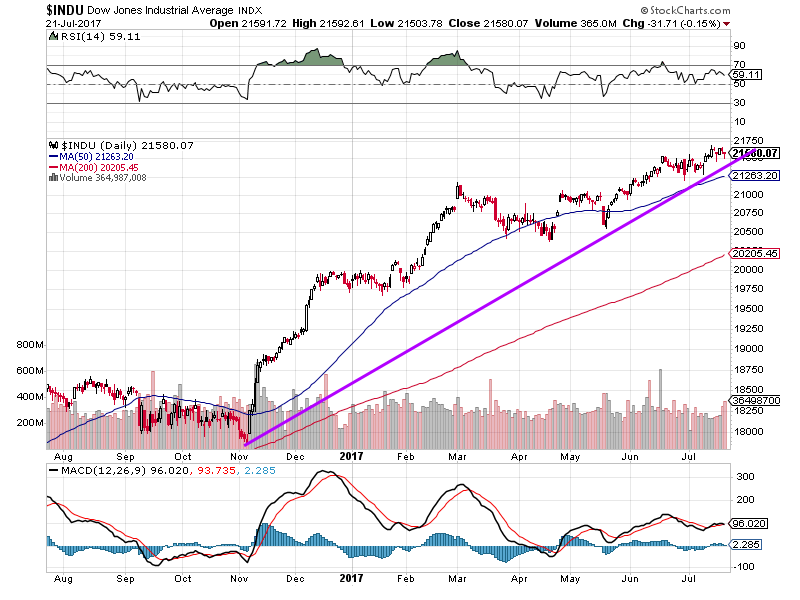
It’s 2017, and the markets are overbought. we agree that they need to let out some steam, but a crash will only occur when sentiment turns bullish. The crowd has not embraced this market, and until they do corrections but not crashes, that is what we should expect.  In fact, we penned an article titled “Dow Could Trade to 30K But Not Before This Happens”, where we discussed the possibility of the Dow trading to 30k before it crashes.  The one factor that could alter this outlook would be for the masses to turn bullish suddenly.

This market will experience a spectacular crash one day; nothing can trend upwards forever, and eventually, the market has to revert to the mean.  Markets never crash on a sour note; the crowd is chanting in joy when the markets suddenly change direction.  A simple look at previous bubbles will prove this; the housing bubble, for example, did not end on a note of fear; the crowd was ecstatic.  Even the Tulip bubble that lasted from 1634-1637 ended on a note of extreme joy.

Jim Rogers states that the next crash will be the worst one we have seen in our lifetimes.

We’ve had financial problems in America — let’s use America — every four to seven years, since the beginning of the republic. Well, it’s been over eight since the last one. This is the longest or second-longest in recorded history, so it’s coming. And the next time it comes — you know, in 2008, we had a problem because of debt. Henry, the debt now is nothing compared to what’s happening now.

In 2008, the Chinese had a lot of money saved for a rainy day. It started raining. They started spending the money. Now even the Chinese have debt, and the debt is much higher. The federal reserves, the central bank in America, the balance sheet is up over five times since 2008. It’s going to be the worst in your lifetime — my lifetime too. Be worried, Business Insider  

In a broad manner of speaking, he is right, but the proverbial question as always is “when”; so far the naysayers have missed the mark by 1000 miles. This entire rally has been based on the fact that the Fed artificially propped the markets by keeping rates low for an insanely long period and infusing billions of dollars into the markets. One day, the pied piper is going to collect, but as we have stated over and over again over the years, until the masses embrace this market, a crash is unlikely. A strong correction is, however, a certainty; it’s just a matter of time.

This stock market bull has defied every Bear market call

The market has defied every call, and even some of the most ardent of bulls are now nervous; we stated this would occur over two years ago.   The Market has put in over 36 new highs this year and is living up to the new name we gave it late in 2016.  Up to that point, we referred to this market as the most hated bull market of all time; after that, we started to refer to this market as the most Insane Stock Market Bull of all time. Insanity, by definition, has no pattern, so expect this market to do things no other market has ever done before.

A Bear Market is a certainty, but the question is when 

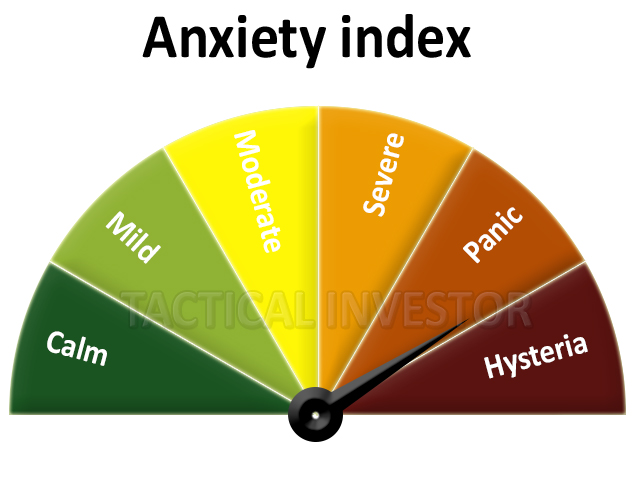
We are using the word correction and not crash for until we start seeing non-stop headlines for Dow 35K,  and the overall sentiment turns bullish, the markets are unlikely to crash.  Sentiment analysis reveals that the crowd is still either uncertain or bearish regarding the stock market.

Investor sentiment negative

The article of interest: What every investor should know about the Dow theory?

From a technical basis, the markets are extremely overbought. However, markets can remain irrational longer than most players can remain solvent. An overbought market does not mean that the market is ready to crash. Look at the stock NVDA; the stock has been trading in the overbought ranges for over two years, and instead of crashing, it has continued to trend higher.


Bear Market and Stock Market Crash Outlook

The market will crash one day, and it will probably be quite a spectacular crash as this market has soared to stunning heights. The main driving force behind this massive move has been and still is hot money. However, we have continuously stated that this bull market would not crash until the masses embraced it. In 2016 we informed our subscribers that the Dow was getting ready to trade to 21K; this target was hit within three months.  The Dow went on to trade to 22K and sentiment is far from bullish.  History indicates that markets always crash on a note of euphoria. Instead of worrying about a future crash, why not put in a few common sense measures that could reduce your risk but also allow you to profit from this bull market

  • Take some money off the table when you position is showing healthy gains
  • Implement trailing stops
  • Put some money into safe haven investments like Gold
  • Monitor the masses; bull markets have never ended on a sour note

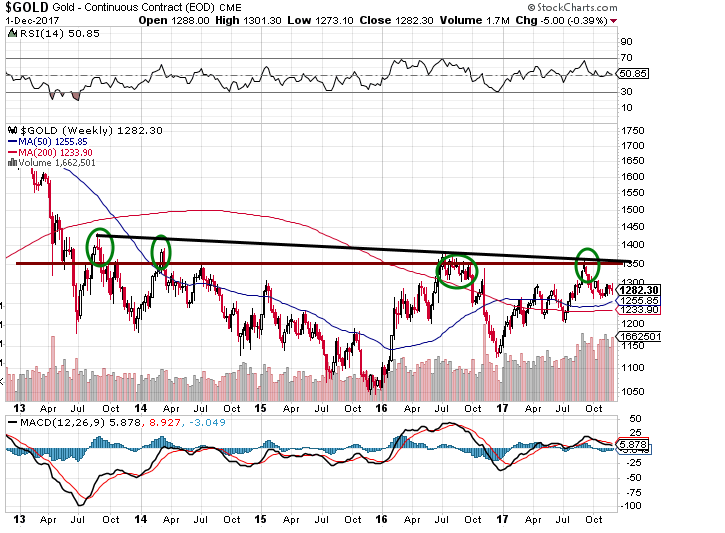
On a separate note, Gold is holding up fairly well, and as long as it does not trade below 1250 on a weekly basis, it has a good chance of testing the 1360-1380 ranges with a possible overshoot to 1400.

Don’t fixate on the crash factor; instead look for great stocks you would like to own. When the market eventually corrects, you will be in a position to pick up top players at a great price.

Is a Bear Market a possibility?

Yes it is but so is death; nobody sits around worrying about that event every single day, do they?

Posted courtesy of the Tactical Investor

Cerebral Adventures: Exploring Unique Intellectual Terrain

which of the following risks would benefit most from portfolio diversification?

Which of the following risks would benefit most from portfolio diversification?

Understanding Portfolio Diversification and Risk Management Investing always involves some degree of risk. The key to successful investing is managing ...
definition of portfolio diversification

The Elegant Definition of Portfolio Diversification: Mastering Risk Management

Introduction: The Art of Navigating Stock Market Trends In the stock market's ever-changing landscape, investors often seek ways to minimize ...
stock market trends 2022

Exploring the Artistry of Stock Market Trends 2022: A Journey Through Finance

Introduction: The Art of Stock Market Navigation Navigating the stock market is akin to a journey through a vast, ever-changing ...
Igniting Your Investing Passion: The Inspiring Lessons of peter lynch books

Igniting Your Investing Passion: The Inspiring Lessons of peter lynch books

Introduction: The Enduring Influence of Peter Lynch Few names shine as brightly in the world of investing as Peter Lynch ...
recommended portfolio diversification

Finesse Your Finances with Recommended Portfolio Diversification Strategies

Introduction: Understanding the Importance of Portfolio Diversification In the world of investing, the age-old adage "don't put all your eggs ...
example investment portfolio diversification

Mastering the Finesse of Example Investment Portfolio Diversification Techniques

Introduction to Example Investment Portfolio Diversification In the world of investing, the age-old adage "don't put all your eggs in ...

AMD vs Intel

AMD vs Intel

Updated 10 June 2024

AMD vs Intel: Can AMD maintain its advantage?

“INTC has lost the leadership in process technology, its key differentiation, and it is losing momentum,” he wrote in a research report published Tuesday. “We continue to be more pessimistic about INTC gross margins as its competitive position is eroding and yields for 10nm are likely to depress gross margin in 2H:19.” https://bit.ly/2H7DX7d

INTC is still running into an issue when it comes to 10nm wafer technology, so how is it going to deal with TSM and AMD that are gearing up to sell 7nm chips. Intel states that it will be ready to sell 10nm chips in 2020, while AMD is gearing up to sell 7nm chips in bulk next year.  In the short term, the picture does not appear to be positive for Intel.

Andy Grove was right when he stated the following “Only the Paranoid Survive” It appears those at the helm of Intel have allowed a culture of arrogance to mushroom. To the early bird comes the worm; to the late bird, the bullet.

Google the behemoth, joins the AMD vs Intel Foray. 

The relationship between Google and AMD could strengthen further. Google has already chosen to supply GPUs for its Stadia gaming service.  Intel was supposed to provide the chips, but a further chip delay could push Google to build upon this relationship with AMD.  Many analysts also feel that Google could embrace the EPC 2 “Rome” processors that are based on the Zen 2 microarchitecture. Google has millions of servers so this could lead to a nice boost in profits for AMD.  Focus on the word “could” and do not change it for the word “will”; this is the trick analysts employ to con the masses into accepting a false narrative.

What sets these chips apart from Intel’s chips? They incorporate 7nm technology, and each chip can have up to eight smaller 7nm chips inside them, allowing a single EPYC 2 processor to have 64 cores and they will be able to execute 128 threads.  The entire data-centre processing industry is paying close attention to these chips, and if a big player like Google embraces them, the odds are relatively high that a lot of other players will follow suit. No one wants to be left behind especially with AI-based technology gaining traction at a rapid pace.

Tom’s Hardware on AMD’s New Chips 

While AMD has said that a single EPYC Rome processor could deliver up to 128 PCIe lanes, the company hasn’t stated how many lanes two processors could deliver in a dual-socket server. According to ServeTheHome.com, there’s a distinct possibility EPYC could feature up to 162 PCIe 4.0 lanes in a dual-socket configuration, which is 82 more lanes than Intel’s dual-socket Cascade Lake Xeon servers. That even beats Intel’s latest 56-core 112-thread Platinum 9200-series processors, which expose 80 PCIe lanes per dual-socket server.

Patrick Kennedy at ServeTheHome, a publication focused on high-performance computing, and RetiredEngineer on Twitter have both concluded that two Rome CPUs could support 160 PCIe 4.0 lanes. Kennedy even expects there will be an additional PCIe lane per CPU (meaning 129 in a single socket), bringing the total number of lanes in a dual-socket server up to 162, but with the caveat that this additional lane per socket could only be used for the baseboard management controller (or BMC), a vital component of server motherboards… If @RetiredEngineer and ServeTheHome did their math correctly, then Intel has even more serious competition than AMD has let on.

Amazon has already started to use the EPYC chips in its AWS service which it is marketing as Amazon EC2 Instances.

Projections are now being made that AMD could capture 10% of the server market share by 2020, this in our opinion could be a conservative estimate; when the rats start to abandon ship, and they usually stampede instead of slowly crawling out.


TSM appears to be cementing its lead over Intel

TSM said that its 5nm process is already in risk production mode. The company claimed it would offer customers a new level of both performance and power optimisation. Compared to TSMC’s 7nm process, the new process generation promises 1.8 times the logic density, 15% speed gain on an Arm Cortex-A72 core, as well as improved SRAM and analogue area reduction.

The 5nm process generation will be TSMC’s second to use extreme ultraviolet (EUV) lithography, which simplifies the manufacturing process. According to TSMC, the EUV lithography also offers excellent yield learning, allowing the 5nm process to achieve a level of maturity faster than previous TSMC process nodes at the same development stage. The new 5nm process design infrastructure is now available for customers to download from TSMC Online.

5nm Processors?

TSMC said earlier this year that its 5nm process would be ready for volume production by the end of 2020, which should be well ahead of Intel’s own relatively competitive 7nm process. Apple’s 2020 iPhone chips are expected to use TSMC’s 5nm EUV process. https://bit.ly/2uSQFzO

TSM does not directly compete with INTC, but this debatable as they are leaving INTC behind when it comes to wafer production, but  INTC competitors like AMD can use these developments to leapfrog ahead of INTC even further in the chip design arena. The ball is now in AMD’s court, and if they execute, correctly it could possibly be a game changer for this underdog.

Furthermore, it opens the door for even more competition as new companies can focus exclusively on creating better chips without having to build the facilities to manufacture the wafers.  This is what scalability is all about. INTC is now losing on two fronts; its wafer technology is out-dated as well as its chip technology.

Wei also noted that TSMC’s 7nm chip client portfolio is broadening. Originally focused on smartphone applications, the 7nm node is now being targeted for chip designs for applications such as HPC and automotive. “Customer tape-out activities at N7 continue to be strong despite the cautious macro outlook,” Wei said.

At the same time, TSMC executives discussed the introduction of N7+, a second generation of the 7nm production process that makes use of EUV lithography. “Our N7+ yield rate is progressing well and comparable to N7. N7+ volume production is scheduled to begin in the second quarter this year. As I have stated before, we are working with several customers on N7+ to support their second and third-wave product designshttps://bit.ly/2IVhkFd

The crowd follows those it believes to be the leader; if the perception of leadership is challenged the leader’s image suffers irreparable damage over the short to intermediate time frames. The former leader has to move fast to contain the damage, if not the damage is usually permanent.

Even minnows are now attempting to take on INTC:

Rene James, the former number two at Intel, currently heads a start-up called Ampere that is going after Intel’s dominant Server chip business. Her exact words, “It’s a once-in-a-50-year situation,” but here’s the rub: it is using TSM to build those chips, and it has already produced data centre chips that have been selected by Lenovo and a few other server-based companies.  This is probably the very start of a new megatrend; time will tell how fast this trend gathers traction.

While Amazon is using AMD’s chips, it is also designing its own chip called the Graviton, and it would never have managed this without TSM capabilities.  AMZN is the largest cloud company in the world, so that’s another thorn for Intel; a price war is brewing, which will further erode Intel’s margins as it struggles to hold onto market share.  Therefore it is possible that INTC could lose up 20% of its current market share to its competitors and possibly more if the masses think nothing is being done to address its shortfalls.  There is still time for Intel to remedy the situation (taking a long-term view), but it needs to start acting decisively soon.

Conclusion

Can we state with certainty that AMD and TSM have won the battle?

If you start off with the wrong premise, no matter how hard you try, the answer will be wrong. AMD does not have its own Fabs, which means it’s at the mercy of TSM. TSM could start charging AMD whatever it wants (in theory), and this would affect AMD’s bottom line. In the end, the relationship between AMD and TSM is one in which TSM holds all the crucial cards for now; designing great chips means nothing if you do not control the means of production.

The real story is the battle between TSM and Intel and in that arena, TSM is leading for now, and if the US government does not start to support essential players as is the case in China, then this could mark a turning point.  While TSM is a Taiwanese company, China has its hands in that pie too, and you will see why as we the article below addresses this issue.

TSM vs INTC Appears  To Be The Real Issue

If TSM remains the dominant player, then sooner or later this technology is going to make its way to China.  China’s government supports key industries, such as semiconductors, 5G, etc., and this is what is enabling them to advance at such a rapid pace. Unless The US starts to take a similar stance, it is just a matter of time before China wins the 5g wars (which it appears to have won already as Huawei so far has the best 5g hardware on the market) and the semiconductor wars.  China is already poaching talent from TSM and other Taiwanese chip-based companies at a rapid pace.

Throughout this article, we used the word could, and might several times, we could have easily opted for the word “will” or something more forceful, but injecting emotions into the game plan is a sure fire way to guarantee a loss. Every situation should be treated in the same way; examine the data in a cool, calm and rational manner.

Courtesy of Tactical Investor

Brain Food: Nourishing Your Intellectual Appetite

which of the following risks would benefit most from portfolio diversification?

Which of the following risks would benefit most from portfolio diversification?

Understanding Portfolio Diversification and Risk Management Investing always involves some degree of risk. The key to successful investing is managing ...
definition of portfolio diversification

The Elegant Definition of Portfolio Diversification: Mastering Risk Management

Introduction: The Art of Navigating Stock Market Trends In the stock market's ever-changing landscape, investors often seek ways to minimize ...
stock market trends 2022

Exploring the Artistry of Stock Market Trends 2022: A Journey Through Finance

Introduction: The Art of Stock Market Navigation Navigating the stock market is akin to a journey through a vast, ever-changing ...
Igniting Your Investing Passion: The Inspiring Lessons of peter lynch books

Igniting Your Investing Passion: The Inspiring Lessons of peter lynch books

Introduction: The Enduring Influence of Peter Lynch Few names shine as brightly in the world of investing as Peter Lynch ...
recommended portfolio diversification

Finesse Your Finances with Recommended Portfolio Diversification Strategies

Introduction: Understanding the Importance of Portfolio Diversification In the world of investing, the age-old adage "don't put all your eggs ...
example investment portfolio diversification

Mastering the Finesse of Example Investment Portfolio Diversification Techniques
Introduction to Example Investment Portfolio Diversification In the world of investing, the age-old adage "don't put all your eggs in ...

US Dollar Finally Hit Bottom?

Gold price USD: US Dollar Finally Hit Bottom?

Updated 10 June 2024

The US Dollar Finally Hit Bottom, and Gold could be heading lower

Gold USD: The theme from the Gold Bug Camp for so long has been that gold is going to soar to the moon.  Many forget that these fools have been singing this song for decades. Instead of soaring to the moon, Gold has been licking the dust for almost seven years. It topped off in 2011, and since then, the action has all gone down with a few false breakouts that the misguided Gold bugs mistook for the beginning of a new bull run.

We are not against Gold or the precious metals sectors; we actually favour the hard money doctrine, but the problem is that view is not shared by the majority.   Mark Dice illustrated that most individuals would take a candy bar over a 10oz bar of Silver.

Now, many would respond by saying these people are stupid, etc.  That’s not the point; the point is that most people no longer view Gold as currency; instead, they view it as some ancient relic.

Is the Dollar getting ready to Rally?

Is the Dollar getting ready to Rally?

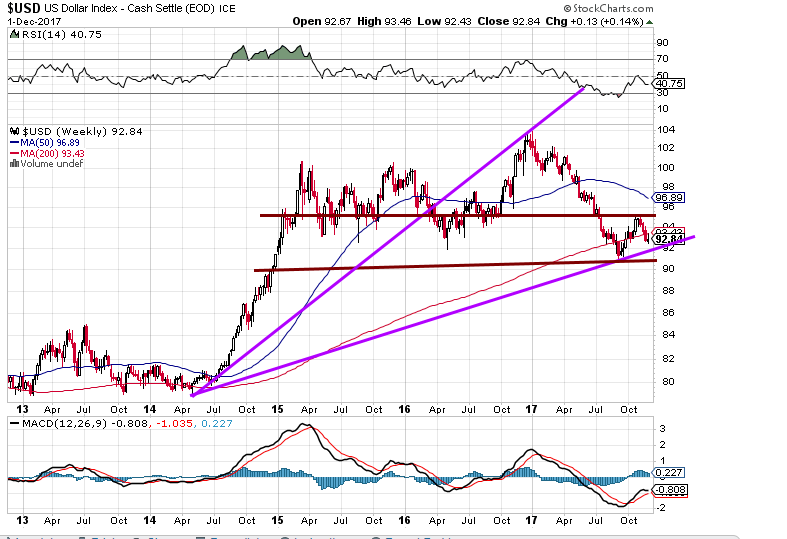
The bigger issue is that the Dollar appears to be putting in a base. The dollar has mounted a very strong rally since it bottomed out in 2011, so the current consolidation is to be expected.  The dollar is holding firmly at 90; a zone of strong support.  As long as the dollar does not close below 90 on a monthly basis the outlook will remain bullish.  With the passage of the Trump’s Tax package, the outlook for the dollar and the stock market has brightened significantly pushing Gold even deeper into the shadows.  If the Dollar can close above 94.50 on a monthly basis, the groundwork will be laid for a test of the old highs.

Gold, on the other hand, looks like it’s going nowhere

Gold market ready to crash, US Dollar ready to Rally

The dollar topped in early 2017 and did the Gold market respond positively to this event.  The reaction was muted at best. Instead of surging to new highs it could not even trade past its July 2016 highs.  To make matters worse, gold put in a lower high than it did in July of 2016, even though the dollar traded below its 2016 lows.

Other bearish factors

Instead of putting in a series of higher lows, Gold has been putting in a series of low highs since 2013.

It has not managed to trade above $1350 for more than a brief period.  This illustrates that demand is not robust and the market is not pricing in all the negative news.  Until Gold can trade above $1350 on a monthly basis, the outlook will remain Neutral to bearish.

If the US Dollar Finally Hit Bottom, then it should be testing its old highs within 12-15 months

The dollar is oversold, and the pattern is still bullish. It has gone through an extensive consolidation phase and it is now trading in the oversold ranges.  A monthly close above 94.50 will solidify the longer-term outlook and indicate that the dollar is ready to test and possibly challenge its all-time highs.


Published courtesy of the Tactical Investor


Other Articles of Interest

which of the following risks would benefit most from portfolio diversification?

Which of the following risks would benefit most from portfolio diversification?

Understanding Portfolio Diversification and Risk Management Investing always involves some degree of risk. The key to successful investing is managing ...
definition of portfolio diversification

The Elegant Definition of Portfolio Diversification: Mastering Risk Management

Introduction: The Art of Navigating Stock Market Trends In the stock market's ever-changing landscape, investors often seek ways to minimize ...
stock market trends 2022

Exploring the Artistry of Stock Market Trends 2022: A Journey Through Finance

Introduction: The Art of Stock Market Navigation Navigating the stock market is akin to a journey through a vast, ever-changing ...
Igniting Your Investing Passion: The Inspiring Lessons of peter lynch books

Igniting Your Investing Passion: The Inspiring Lessons of peter lynch books

Introduction: The Enduring Influence of Peter Lynch Few names shine as brightly in the world of investing as Peter Lynch ...
recommended portfolio diversification

Finesse Your Finances with Recommended Portfolio Diversification Strategies

Introduction: Understanding the Importance of Portfolio Diversification In the world of investing, the age-old adage "don't put all your eggs ...
example investment portfolio diversification

Mastering the Finesse of Example Investment Portfolio Diversification Techniques

Introduction to Example Investment Portfolio Diversification In the world of investing, the age-old adage "don't put all your eggs in ...

What Every Investor Should Know about the Dow Theory?

What Every Investor Should Know about the Dow Theory?

Updated June 10, 2024

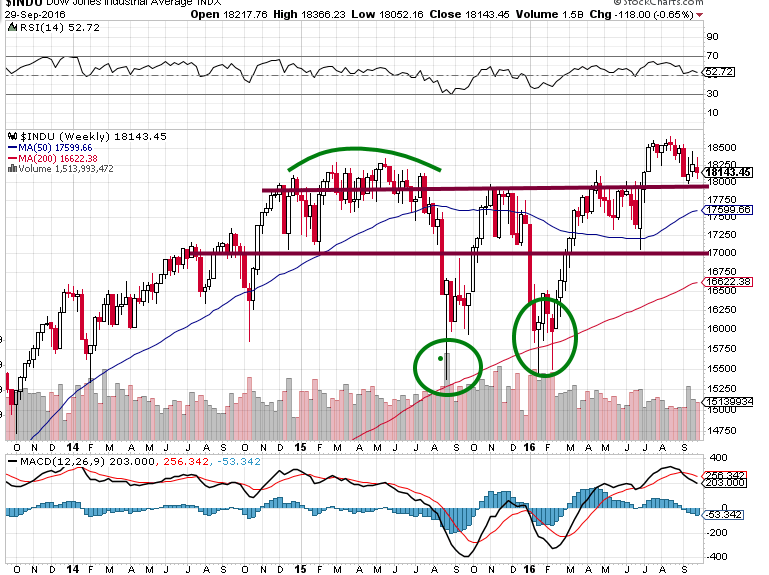
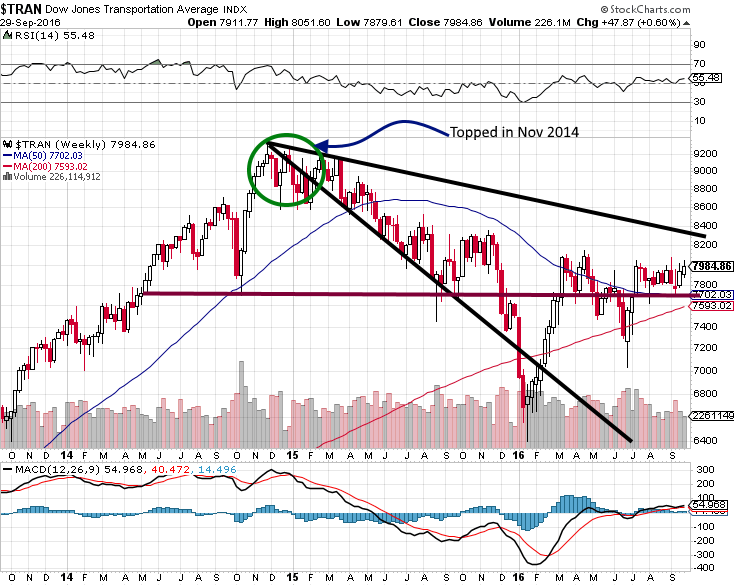
The transport topped out in November of 2014, and according to the Dow theory, this is a big negative; the Dow Industrials should have followed suit. Instead, the Dow soared higher, paying no heed to this theory, proving to a large degree that this argument has lost its value. After all, it is a theory, and the definition of a theory is “a supposition or a system of ideas intended to explain something, especially one based on general principles independent of the thing to be explained.”

Dow Jones Transportation Index 26 September 2016

As early as 2006 we offered an Alternative Dow Theory that has proved far more accurate and reliable than the original Dow theory.  Just to let this sink in, the transport topped out almost two years ago, and instead of trending lower, the markets have surged to new highs. If you look at the above chart, the Transports appear to be finally gathering momentum and breaking out. In the Dow theory alternative, we stated it was the Utilities that lead the way as opposed to the Dow transports, well let’s see if that holds true. We are using older charts to fully illustrate the power behind this alternative theory.

Dow Jones Utility Index

The Alternative Dow Theory Has A Better Track Record than its predecessor.

In the chart above, the utilities pulled back after the Dow transports, let out some steam and then soared to new highs. Even though the correction appeared strong, the Dow utilities held above the main uptrend line.  It is all but obvious that the Dow utilities are a better barometer of what one should expect from the markets.  The Utilities topped in Feb of 2015, and after that, the Dow trended sideways before correcting, illustrating that they follow the lead of the Utilities and not the Dow transports.

The Dow utilities bottomed towards the end of August 2015 and rallied until November 2015 before pulling back again. The Dow followed in the utilities’ footsteps. It bottomed in January 2016, while the utilities bottomed in December 2015, once again leading the way. The Dow utilities rallied until July 2016 before pulling back.

The Dow rallied until Aug of 2016, proving again that the utilities are a better indicator of market direction than the Dow transports.  At this point, the utilities are building momentum to take off again. If the pattern holds, then the Dow should follow in its path. 

How are the Dow Industrials and Dow Transports faring in 2017?

Dow Industrials and Dow Transports faring in 2017

Well, as you can see the transports took off like a rocket after September 2016 and have not looked back since. The picture of the Dow industrials is almost identical to that of the Dow Transports.

Dow Jones Industrial Average Index - Dow transports

Once again, we have clear evidence illustrating that the Dow utilities provide a much clearer picture of where the Dow is heading than the Dow Transports.

Out with the Old Dow Theory and In with the New Dow Theory

The Dow utilities and the Dow industrials traded to new highs; this means that rather than leading the way up, the Dow transports propel individuals to draw the wrong conclusion. The Dow Theory ceased to work properly a long time ago, and in the era of hot money, it is having a hard time trying to be relevant. The alternate Dow Theory that focuses on the utilities is a better option. Thus, maybe it is time to put this 100-year-old theory to rest; we will let you be the judge.

Paying attention to what the utilities are doing in the future could be rewarding. Once the Dow utilities start to trend upwards, it should serve as a strong signal that the Dow will follow in its path. Applying the principles of Mass psychology and Contrarian investing, we could confidently state that the experts were wrong when they said this market would crash in 2014, 2015, 2016, and 2017. We repeatedly went on record to the state that this Stock Market Bull would trade to heights that would shock everyone.

Published courtesy of the Tactical Investor

Scholarly Escapades: Exceptional Reads for the Curious

which of the following risks would benefit most from portfolio diversification?

Which of the following risks would benefit most from portfolio diversification?

Understanding Portfolio Diversification and Risk Management Investing always involves some degree of risk. The key to successful investing is managing ...
definition of portfolio diversification

The Elegant Definition of Portfolio Diversification: Mastering Risk Management

Introduction: The Art of Navigating Stock Market Trends In the stock market's ever-changing landscape, investors often seek ways to minimize ...
stock market trends 2022

Exploring the Artistry of Stock Market Trends 2022: A Journey Through Finance

Introduction: The Art of Stock Market Navigation Navigating the stock market is akin to a journey through a vast, ever-changing ...
Igniting Your Investing Passion: The Inspiring Lessons of peter lynch books

Igniting Your Investing Passion: The Inspiring Lessons of peter lynch books

Introduction: The Enduring Influence of Peter Lynch Few names shine as brightly in the world of investing as Peter Lynch ...
recommended portfolio diversification

Finesse Your Finances with Recommended Portfolio Diversification Strategies

Introduction: Understanding the Importance of Portfolio Diversification In the world of investing, the age-old adage "don't put all your eggs ...
example investment portfolio diversification

Mastering the Finesse of Example Investment Portfolio Diversification Techniques

Introduction to Example Investment Portfolio Diversification In the world of investing, the age-old adage "don't put all your eggs in ...

Patience Warren Buffett Quotes: Timeless Wisdom for Elegant Investing

patience warren buffett quotes

Introduction: The Value of Patience in Investing

In the fast-paced world of investing, it’s easy to get caught up in the pursuit of quick gains and short-term profits. However, one of the most successful investors of all time, Warren Buffett, has consistently emphasized the importance of patience in achieving long-term success. Buffett’s wisdom, encapsulated in his countless quotes, serves as a beacon of guidance for investors seeking to navigate the complexities of the financial markets with elegance and grace.

As the CEO of Berkshire Hathaway, Warren Buffett has amassed a fortune through his disciplined and patient approach to investing. His words of wisdom have inspired generations of investors to adopt a long-term perspective and resist the temptation of impulsive decisions. In this article, we will explore some of the most profound patience quotes by Warren Buffett and uncover the timeless lessons they hold for elegant investing.

1. “Someone’s sitting in the shade today because someone planted a tree a long time ago.”

This quote beautifully illustrates the concept of delayed gratification and the rewards that come with patient investing. Just as a tree takes years to grow and provide shade, investments require time to mature and bear fruit. Buffett reminds us that the seeds we plant today, in the form of carefully selected investments, can yield significant returns in the future.

Renowned investor Charlie Munger, Buffett’s long-time business partner, echoes this sentiment: “The big money is not in the buying and selling but in the waiting.” By embracing patience and taking a long-term view, investors can allow their investments to compound and grow over time, ultimately leading to substantial wealth creation.

2. “Our favorite holding period is forever.”

Buffett’s approach to investing is rooted in the belief that the best way to build wealth is to identify high-quality companies and hold onto them for the long haul. This quote encapsulates his conviction in the power of patient, buy-and-hold investing. By investing in businesses with strong fundamentals, competitive advantages, and capable management teams, investors can benefit from the compounding effects of growth over extended periods.

Legendary investor Philip Fisher, whose work greatly influenced Buffett, also stressed the importance of patience in investing. In his book “Common Stocks and Uncommon Profits,” Fisher wrote, “The stock market is filled with individuals who know the price of everything, but the value of nothing.” By focusing on the intrinsic value of a company and holding onto investments patiently, investors can avoid the pitfalls of short-term market fluctuations and reap the rewards of long-term growth.

3. “The stock market is a device for transferring money from the impatient to the patient.”

This quote highlights the stark contrast between the behaviour of impatient and patient investors. Impatient investors often succumb to the temptation of chasing short-term gains, frequently buying and selling based on market sentiment and emotions. On the other hand, patient investors understand that the stock market rewards those who have the discipline to stay the course, even during times of volatility and uncertainty.

Benjamin Graham, the father of value investing and Buffett’s mentor, also emphasized the importance of patience in his seminal work, “The Intelligent Investor.” Graham wrote, “The investor’s chief problem—and even his worst enemy—is likely to be himself.” By maintaining a patient and rational approach, investors can avoid the costly mistakes that arise from impatience and emotional decision-making.

4. “No matter how great the talent or efforts, some things just take time. You can’t produce a baby in one month by getting nine women pregnant.”

Buffett’s humorous yet profound analogy reminds us that success in investing, like in many aspects of life, cannot be rushed. Just as a baby needs nine months to develop, regardless of the number of women involved, investments require time to mature and reach their full potential. Attempting to speed up the process through excessive trading or chasing quick gains often leads to suboptimal results.

Renowned investor Peter Lynch, who successfully managed the Magellan Fund at Fidelity Investments, shared a similar perspective. Lynch famously said, “The real key to making money in stocks is not to get scared out of them.” By staying invested patiently, even during market downturns, investors can benefit from the long-term growth potential of their carefully selected investments.

5. “If you aren’t willing to own a stock for ten years, don’t even think about owning it for ten minutes.”

This quote underscores Buffett’s conviction in the importance of a long-term investment horizon. He suggests that investors should approach stock ownership with a mindset of becoming a part-owner of a business, rather than merely seeking short-term price fluctuations. By carefully evaluating a company’s fundamentals, competitive advantages, and future growth prospects, investors can decide which stocks to hold for the long term.

Legendary investor Sir John Templeton also emphasized the value of patience in investing. Templeton famously said, “The four most dangerous words in investing are: ‘this time it’s different.'” By recognizing that emotions and hype often drive short-term market movements, patient investors can avoid the pitfalls of chasing trends and instead focus on the underlying fundamentals of their investments.

Conclusion: Embracing Patience for Elegant Investing

The patience Warren Buffett’s quotes explored in this article offer timeless wisdom for investors seeking to navigate the financial markets with elegance and success. By embracing patience, focusing on long-term value creation, and resisting the temptation of short-term gains, investors can position themselves for significant wealth accumulation over time.

Buffett’s insights, along with the wisdom of other renowned investors like Charlie Munger, Philip Fisher, Benjamin Graham, Peter Lynch, and Sir John Templeton, serve as a powerful reminder that patience is a virtue in investing. By adopting a long-term perspective, conducting thorough research, and staying disciplined in the face of market volatility, investors can unlock the true potential of their investments and achieve elegant, sustainable growth.

Warren Buffett himself said, “The most important quality for an investor is temperament, not intellect.” By cultivating patience and maintaining a level-headed approach, investors can position themselves for success in the ever-changing landscape of the financial markets. So, take a cue from the Oracle of Omaha, embrace patience, and embark on a journey of elegant investing that stands the test of time.

Mental Marvels: Discovering Hidden Gems

which of the following risks would benefit most from portfolio diversification?

Which of the following risks would benefit most from portfolio diversification?

Understanding Portfolio Diversification and Risk Management Investing always involves some degree of risk. The key to successful investing is managing ...
definition of portfolio diversification

The Elegant Definition of Portfolio Diversification: Mastering Risk Management

Introduction: The Art of Navigating Stock Market Trends In the stock market's ever-changing landscape, investors often seek ways to minimize ...
stock market trends 2022

Exploring the Artistry of Stock Market Trends 2022: A Journey Through Finance

Introduction: The Art of Stock Market Navigation Navigating the stock market is akin to a journey through a vast, ever-changing ...
Igniting Your Investing Passion: The Inspiring Lessons of peter lynch books

Igniting Your Investing Passion: The Inspiring Lessons of peter lynch books

Introduction: The Enduring Influence of Peter Lynch Few names shine as brightly in the world of investing as Peter Lynch ...
recommended portfolio diversification

Finesse Your Finances with Recommended Portfolio Diversification Strategies

Introduction: Understanding the Importance of Portfolio Diversification In the world of investing, the age-old adage "don't put all your eggs ...
example investment portfolio diversification

Mastering the Finesse of Example Investment Portfolio Diversification Techniques
Introduction to Example Investment Portfolio Diversification In the world of investing, the age-old adage "don't put all your eggs in ...

What is return on investment in real estate?

what is return on investment in real estate?

Introduction to Return on Investment in Real Estate

When investing in real estate, one of the most crucial metrics to understand is return on investment (ROI). ROI is a powerful tool that helps investors gauge the profitability and effectiveness of their real estate investments. In this article, we will dive deep into the concept of return on investment in real estate, exploring its definition, calculation methods, and the factors that influence it. By the end of this piece, you will have a comprehensive understanding of what ROI is and how it can help you make informed decisions in your real estate investment journey.

Defining Return on Investment in Real Estate

Return on investment is a financial metric that measures the profitability of an investment relative to its cost. In the context of real estate, ROI represents the percentage of profit or loss generated by a property investment compared to the amount of money invested. As real estate investor and author Brandon Turner explains, “ROI is the most important metric in real estate investing because it tells you how well your money is working for you.”

The basic formula for calculating ROI is:

ROI = (Gain from Investment – Cost of Investment) / Cost of Investment

For example, if you purchase a property for $200,000 and sell it for $250,000, your ROI would be:

ROI = ($250,000 – $200,000) / $200,000 = 0.25 or 25%

Different Methods of Calculating ROI in Real Estate

While the basic ROI formula provides a quick snapshot of an investment’s profitability, various methods of calculating ROI in real estate exist, each with its own advantages and limitations.

1. Cash-on-Cash Return

Cash-on-cash return is a popular ROI calculation that focuses on the annual return generated by the cash invested in a property. It is calculated by dividing the annual pre-tax cash flow by the total cash invested. This method is particularly useful for investors who finance their properties with a mortgage, as it takes into account the leverage used.

2. Capitalization Rate

Capitalization rate, or cap rate, is another commonly used ROI metric in real estate. It is calculated by dividing the net operating income (NOI) of a property by its current market value or purchase price. Cap rate provides a straightforward way to compare the potential returns of different properties, regardless of their financing structure.

3. Internal Rate of Return (IRR)

Internal rate of return is a more complex ROI calculation that takes into account the time value of money. IRR represents the annual rate of return that makes the net present value of all cash flows (both positive and negative) equal to zero. This method is favoured by investors who hold properties for longer periods and want to account for the timing of their cash flows.

Factors That Influence Return on Investment in Real Estate

Several key factors can impact the return on investment in real estate. Understanding these variables is crucial for investors seeking to maximize their ROI.

1. Location

Location is one of the most significant factors affecting real estate ROI. Properties in desirable areas with strong economic growth, low crime rates, and good schools tend to appreciate faster and generate higher rental income, leading to better returns.

2. Property Type and Condition

The type of property (e.g., single-family home, multifamily, commercial) and its condition also play a role in determining ROI. Properties that require extensive repairs or renovations may have lower initial ROI but can offer significant upside potential if improvements are made strategically.

3. Financing

The financing structure of a real estate investment can greatly impact ROI. Investors who use leverage (i.e., a mortgage) can potentially amplify their returns but also face higher risk. Interest rates, loan terms, and down payment requirements are all important considerations when evaluating the impact of financing on ROI.

4. Market Conditions

Real estate markets are dynamic and can experience fluctuations due to various economic, demographic, and political factors. Investors must stay attuned to market conditions, such as supply and demand, rental rates, and price trends, to make informed decisions that optimize their ROI.

Maximizing Return on Investment in Real Estate

To maximize return on investment in real estate, investors can employ several strategies:

1. Due Diligence

Thorough due diligence is essential before making any real estate investment. This includes researching the property, analyzing market trends, and conducting a comprehensive financial analysis to ensure the investment aligns with your goals and risk tolerance.

2. Value-Add Opportunities

Identifying properties with value-add potential can be a powerful way to boost ROI. This may involve making strategic renovations, improving property management, or repositioning the property to attract higher-paying tenants.

3. Long-Term Buy and Hold

Investing in real estate with a long-term horizon can be an effective strategy to maximize ROI. By holding properties for several years, investors can benefit from appreciation, tax advantages, and the power of compounding returns.

4. Diversification

Diversifying a real estate portfolio across different property types, locations, and investment strategies can help mitigate risk and optimize returns. As the adage goes, “Don’t put all your eggs in one basket.”

The Importance of Tracking and Evaluating ROI

Regularly tracking and evaluating the return on investment of your real estate portfolio is crucial for making informed decisions and adjusting your strategy as needed. By monitoring key metrics such as cash flow, appreciation, and occupancy rates, investors can identify areas for improvement and make data-driven decisions to optimize their returns.

As real estate mogul and Shark Tank star Barbara Corcoran advises, “The best way to predict the future is to track the past.” By keeping a close eye on your ROI and learning from your investment history, you can refine your approach and make more profitable decisions in the future.

Conclusion

Return on investment is a vital metric that every real estate investor should understand and utilize. By grasping the different methods of calculating ROI, the factors that influence it, and strategies to maximize it, investors can make more informed decisions and ultimately achieve their financial goals.

However, it’s important to remember that ROI is just one piece of the puzzle. Real estate investing also requires careful consideration of risk, market conditions, and personal objectives. As with any investment, there are no guarantees, and past performance does not necessarily indicate future results.

By combining a thorough understanding of return on investment with due diligence, strategic planning, and a long-term perspective, real estate investors can navigate the complex world of real estate with confidence and success.

Curated Curiosities: Exceptional Articles Worth Your Time

which of the following risks would benefit most from portfolio diversification?

Which of the following risks would benefit most from portfolio diversification?

Understanding Portfolio Diversification and Risk Management Investing always involves some degree of risk. The key to successful investing is managing ...
definition of portfolio diversification

The Elegant Definition of Portfolio Diversification: Mastering Risk Management

Introduction: The Art of Navigating Stock Market Trends In the stock market's ever-changing landscape, investors often seek ways to minimize ...
stock market trends 2022

Exploring the Artistry of Stock Market Trends 2022: A Journey Through Finance

Introduction: The Art of Stock Market Navigation Navigating the stock market is akin to a journey through a vast, ever-changing ...
Igniting Your Investing Passion: The Inspiring Lessons of peter lynch books

Igniting Your Investing Passion: The Inspiring Lessons of peter lynch books

Introduction: The Enduring Influence of Peter Lynch Few names shine as brightly in the world of investing as Peter Lynch ...
recommended portfolio diversification

Finesse Your Finances with Recommended Portfolio Diversification Strategies

Introduction: Understanding the Importance of Portfolio Diversification In the world of investing, the age-old adage "don't put all your eggs ...
example investment portfolio diversification

Mastering the Finesse of Example Investment Portfolio Diversification Techniques
Introduction to Example Investment Portfolio Diversification In the world of investing, the age-old adage "don't put all your eggs in ...

Showcasing Investment Prowess: The Art of Global Tactical Asset Allocation

global tactical asset allocation

Introduction to Global Tactical Asset Allocation

In the ever-changing landscape of financial markets, investors are constantly seeking strategies to maximize returns while minimizing risk. One approach that has gained significant attention in recent years is global tactical asset allocation (GTAA). This sophisticated investment strategy involves dynamically adjusting portfolio allocations across various asset classes and geographies based on prevailing market conditions. By showcasing investment prowess through the art of global tactical asset allocation, investors can navigate volatile markets with finesse and precision.

Understanding the Fundamentals of GTAA

Global tactical asset allocation is a top-down investment approach that focuses on exploiting short-term market inefficiencies and opportunities. Unlike traditional strategic asset allocation, which maintains a relatively static portfolio mix, GTAA allows for more frequent adjustments based on shifting market dynamics. This flexibility enables investors to capitalize on potential mispricings and capture value across different asset classes and regions.

The foundation of GTAA lies in rigorous quantitative analysis and macroeconomic research. Investment managers employing this strategy closely monitor various economic indicators, such as GDP growth, inflation rates, interest rates, and geopolitical events. They aim to identify trends and patterns that can inform their asset allocation decisions by analysing these factors. As Dr. Robert Shiller, Nobel Laureate in Economics, explains, “The key to successful investing is not predicting the future, but rather understanding the present and how it might evolve.”

The Benefits of Global Tactical Asset Allocation

One of the primary advantages of global tactical asset allocation is its potential to enhance risk-adjusted returns. By dynamically shifting allocations based on market conditions, GTAA seeks to mitigate downside risk during market turbulence while capitalizing on upside potential during bullish cycles. This adaptability can lead to smoother portfolio performance over time, as highlighted by a study by the Journal of Portfolio Management, which found that GTAA strategies outperformed traditional static allocations on a risk-adjusted basis.

Moreover, GTAA allows investors to diversify their portfolios across multiple dimensions. By incorporating a wide range of asset classes, including equities, fixed income, commodities, and alternative investments, GTAA can help reduce portfolio volatility and improve overall stability. As renowned investor Ray Dalio points out, “Diversification is the most important thing you need to do in order to invest well.”

Implementing GTAA: A Systematic Approach

To effectively implement global tactical asset allocation, investment managers rely on a systematic and disciplined approach. This typically involves the development of quantitative models that analyze vast amounts of market data and generate actionable insights. These models may incorporate valuation metrics, momentum indicators, and risk sentiment to identify attractive investment opportunities.

However, the art of GTAA goes beyond mere quantitative analysis. Successful practitioners also bring experience and qualitative judgment to the table. They must deeply understand global economic trends, geopolitical risks, and market psychology. As legendary investor George Soros once remarked, “I’m only rich because I know when I’m wrong.” This ability to adapt and course-correct in response to changing market conditions is a hallmark of skilled GTAA managers.

The Role of Risk Management in GTAA

Effective risk management is a critical component of global tactical asset allocation. Given the strategy’s dynamic nature, robust risk controls are essential to mitigate potential drawdowns and preserve capital. This may involve setting clear risk budgets, implementing stop-loss mechanisms, and regularly monitoring portfolio exposures.

Moreover, GTAA managers must be mindful of liquidity risks, particularly when investing in less liquid asset classes or markets. As the global financial crisis of 2008 demonstrated, liquidity can quickly evaporate during periods of market stress, leading to significant challenges in portfolio rebalancing. Therefore, GTAA strategies often incorporate liquidity management techniques to ensure that portfolios can be adjusted on time and cost-effectively.

The Future of Global Tactical Asset Allocation

As financial markets continue to evolve and new investment opportunities emerge, the relevance of global tactical asset allocation is likely to grow. The increasing interconnectedness of global economies and the rapid pace of technological advancements present challenges and opportunities for GTAA practitioners.

One area of focus for the future of GTAA is the integration of alternative data sources and machine learning techniques. By leveraging vast amounts of unstructured data, such as satellite imagery, social media sentiment, and consumer behaviour patterns, investment managers can gain unique insights into market dynamics and make more informed allocation decisions. As Marcos López de Prado, a leading expert in quantitative finance, notes, “The future of investment management lies at the intersection of human and machine intelligence.”

Conclusion

Global tactical asset allocation represents a powerful tool for investors seeking to navigate the complexities of modern financial markets. By showcasing investment prowess through GTAA, investors can potentially enhance risk-adjusted returns, achieve greater diversification, and adapt to changing market conditions with agility and precision.

However, the success of GTAA strategies relies on rigorous quantitative analysis, experienced qualitative judgment, and effective risk management. As the investment landscape continues to evolve, those who master the art of global tactical asset allocation will be well-positioned to capitalize on the opportunities.

Brain Food: Nourishing Your Intellectual Appetite

which of the following risks would benefit most from portfolio diversification?

Which of the following risks would benefit most from portfolio diversification?

Understanding Portfolio Diversification and Risk Management Investing always involves some degree of risk. The key to successful investing is managing ...
definition of portfolio diversification

The Elegant Definition of Portfolio Diversification: Mastering Risk Management

Introduction: The Art of Navigating Stock Market Trends In the stock market's ever-changing landscape, investors often seek ways to minimize ...
stock market trends 2022

Exploring the Artistry of Stock Market Trends 2022: A Journey Through Finance

Introduction: The Art of Stock Market Navigation Navigating the stock market is akin to a journey through a vast, ever-changing ...
Igniting Your Investing Passion: The Inspiring Lessons of peter lynch books

Igniting Your Investing Passion: The Inspiring Lessons of peter lynch books

Introduction: The Enduring Influence of Peter Lynch Few names shine as brightly in the world of investing as Peter Lynch ...
recommended portfolio diversification

Finesse Your Finances with Recommended Portfolio Diversification Strategies

Introduction: Understanding the Importance of Portfolio Diversification In the world of investing, the age-old adage "don't put all your eggs ...
example investment portfolio diversification

Mastering the Finesse of Example Investment Portfolio Diversification Techniques

Introduction to Example Investment Portfolio Diversification In the world of investing, the age-old adage "don't put all your eggs in ...

What is the purpose of portfolio diversification?

what is the purpose of portfolio diversification

Introduction: Understanding Portfolio Diversification

In the world of investing, portfolio diversification is often discussed as a crucial strategy for managing risk and optimizing returns. But what is portfolio diversification’s purpose, and why is it so important? This article will delve into the fundamentals of diversification, exploring its benefits, strategies, and how it can help you navigate the complex investing landscape.

What is Portfolio Diversification?

Portfolio diversification is spreading your investment capital across various asset classes, sectors, and geographic regions to minimize the impact of any single investment’s performance on your overall portfolio. By allocating your funds to diverse investments, you aim to reduce the volatility and risk associated with individual securities or markets.

As the adage goes, “Don’t put all your eggs in one basket.” This wisdom aptly applies to investing. By diversifying your portfolio, you essentially create multiple “baskets” of investments, each with its unique characteristics and potential for growth or loss.

The Purpose of Portfolio Diversification

The primary purpose of portfolio diversification is to manage and mitigate risk. No single investment or asset class consistently outperforms others in all market conditions. By spreading your investments across various asset classes, you can potentially offset losses in one area with gains in another, thereby reducing your portfolio’s overall volatility.

Diversification aims to strike a balance between risk and return. While it may limit your potential for outsized gains from a single high-performing investment, it also helps protect your portfolio from significant losses if it underperforms or fails.

Benefits of Portfolio Diversification

1. Risk Reduction: Investing in various assets can minimize the impact of any single investment’s performance on your overall portfolio. If one investment performs poorly, others may compensate for the loss.

2. Potential for Higher Returns: Diversification allows you to participate in the growth of different sectors and asset classes. By not relying on a single source of returns, you can potentially enhance your portfolio’s overall performance.

3. Smoother Ride: A well-diversified portfolio tends to experience less volatility compared to a concentrated one. This can provide a more stable and predictable investment journey, reducing stress and emotional decision-making.

4. Flexibility and Adaptability: Diversification enables you to adapt your portfolio to changing market conditions and personal circumstances. As your goals or risk tolerance evolve, you can adjust your asset allocation accordingly.

Strategies for Portfolio Diversification

1. Asset Allocation: Divide your portfolio among asset classes, such as stocks, bonds, real estate, and commodities. Each asset class has its risk-return profile, and by allocating funds across them, you can create a balanced portfolio aligned with your goals and risk tolerance.

2. Sector Diversification: Within each asset class, you can further diversify by investing in various sectors. For example, you might invest in technology, healthcare, energy, and consumer goods sectors within the stock market to spread your risk.

3. Geographic Diversification: Investing in different geographic regions can help mitigate the impact of local economic or political events. By including international investments in your portfolio, you can benefit from growth opportunities in other markets while reducing country-specific risks.

4. Investment Style Diversification: Diversifying across investment styles, such as growth and value investing, can help balance your portfolio’s risk and return potential. Growth investments focus on companies with high growth prospects, while value investments target undervalued securities with the potential for price appreciation.

The Role of Asset Correlation

Asset correlation refers to how different investments move about one another. When constructing a diversified portfolio, it’s essential to consider the correlation between various asset classes and investments.

Ideally, you want to include assets with low or negative correlations, meaning they tend to move independently or in opposite directions. By combining assets with low correlations, you can potentially reduce the overall volatility of your portfolio, as losses in one investment may be offset by gains in another.

Diversification and Risk Tolerance

While diversification is a crucial tool for managing risk, it’s important to understand that it does not eliminate risk. No matter how well-diversified your portfolio is, there is always some risk involved in investing.

Your risk tolerance, which is your ability and willingness to withstand potential losses, should guide your diversification strategy. A more conservative investor may allocate a larger portion of their portfolio to less volatile assets, such as bonds, while a more aggressive investor may have a higher allocation to stocks or alternative investments.

Rebalancing Your Portfolio

Over time, the performance of different investments in your portfolio can cause your asset allocation to drift away from your original target. This is where portfolio rebalancing comes into play.

Rebalancing involves periodically adjusting your portfolio to bring it back in line with your desired asset allocation. This process typically involves selling investments that have become overweighted and buying those that have become underweight.

Regular rebalancing helps maintain your intended level of diversification and risk exposure, ensuring that your portfolio remains aligned with your investment goals and risk tolerance.

Conclusion: Embracing Diversification for Long-Term Success

Portfolio diversification is a powerful tool for managing risk and optimizing returns on investing. By spreading your investments across various asset classes, sectors, and geographic regions, you can potentially reduce volatility, enhance returns, and create a more resilient portfolio.

However, it’s important to remember that diversification is not a one-size-fits-all approach. Your diversification strategy should be tailored to your unique financial goals, risk tolerance, and investment horizon.

As with any investment strategy, it’s wise to consult a financial professional who can provide personalized guidance and help you develop a diversified portfolio that aligns with your needs and objectives.

By embracing the purpose and power of portfolio diversification, you can confidently navigate the complex world of investing, knowing that you have taken steps to manage risk and position yourself for long-term financial success.

Perspectives Unveiled: Uncommon Insights and Ideas

which of the following risks would benefit most from portfolio diversification?

Which of the following risks would benefit most from portfolio diversification?

Understanding Portfolio Diversification and Risk Management Investing always involves some degree of risk. The key to successful investing is managing ...
definition of portfolio diversification

The Elegant Definition of Portfolio Diversification: Mastering Risk Management

Introduction: The Art of Navigating Stock Market Trends In the stock market's ever-changing landscape, investors often seek ways to minimize ...
stock market trends 2022

Exploring the Artistry of Stock Market Trends 2022: A Journey Through Finance

Introduction: The Art of Stock Market Navigation Navigating the stock market is akin to a journey through a vast, ever-changing ...
Igniting Your Investing Passion: The Inspiring Lessons of peter lynch books

Igniting Your Investing Passion: The Inspiring Lessons of peter lynch books

Introduction: The Enduring Influence of Peter Lynch Few names shine as brightly in the world of investing as Peter Lynch ...
recommended portfolio diversification

Finesse Your Finances with Recommended Portfolio Diversification Strategies

Introduction: Understanding the Importance of Portfolio Diversification In the world of investing, the age-old adage "don't put all your eggs ...
example investment portfolio diversification

Mastering the Finesse of Example Investment Portfolio Diversification Techniques
Introduction to Example Investment Portfolio Diversification In the world of investing, the age-old adage "don't put all your eggs in ...

Precious Metals 101: Mastering How to Buy Gold and Silver Bars

how to buy gold and silver bars
An Introduction to Precious Metals Investing

Investing in precious metals like gold and silver offers a unique opportunity to diversify your portfolio and protect your wealth. With global economic uncertainties and volatile markets, many investors turn to gold and silver bars as a hedge against inflation and a store of value. This guide on how to buy gold and silver bars will give you a comprehensive understanding of the world of precious metals investing. We’ll cover the benefits, the different types of bars, where to buy them, and important considerations to make before taking the plunge.

Why Invest in Gold and Silver Bars?

Gold and silver bars have long been considered a haven for investors. Here are some of the key benefits that make these precious metals an attractive investment option:

  • Hedging Against Inflation: Gold and silver typically maintain their value or even increase in worth during high inflation. They serve as a hedge against the declining purchasing power of paper currencies.
  • Portfolio Diversification: Investing in precious metals adds a layer of diversification to your portfolio. They often move independently of traditional assets like stocks and bonds, reducing overall risk.
  • Safe Haven in Times of Crisis: Gold and silver perform well in economic or geopolitical uncertainty. They are seen as stable assets that preserve wealth during market downturns or volatile periods.
  • Long-Term Value and Liquidity: Gold and silver have intrinsic value and a long history as mediums of exchange. They are readily convertible into cash, making them highly liquid assets.
  • Tangible and Finite Resource: Unlike fiat currencies, gold and silver are tangible assets with a finite supply. This scarcity adds to their value and makes them desirable to investors worldwide.


Types of Gold and Silver Bars

When purchasing gold and silver, investors have various options in bar sizes and purity levels. Understanding these variations will help you make informed decisions about which bars best align with your investment goals.

  • Gold Bars:
    Standard Sizes: Gold bars typically come in sizes ranging from 1 gram to 1 kilogram. Standard weights include 1 ounce, 10 ounces, and 1 kilogram.
    Purity Levels: Gold bars are usually available in 99.9% or 99.99% purity, also denoted as .999 or .9999 fineness. The higher the purity, the higher the premium.
  • Silver Bars:
    Standard Sizes: Silver bars are generally larger than gold bars, with standard sizes ranging from 1 ounce to 100 ounces. Popular weights include 10 ounces, 1 kilogram, and 100 ounces.
    Purity Levels: Silver bars typically have a purity level of 99.9%, although some speciality bars may reach 99.99%. Like gold, higher purity commands a higher premium.
  • Minted vs. Cast Bars: Minted bars are produced similarly to coin minting, resulting in uniform sizes and smooth surfaces. Cast bars, conversely, are made by pouring molten metal into moulds, giving them a more rustic appearance. Cast bars are generally cheaper due to lower production costs.


Where to Buy Gold and Silver Bars

Dealing with reputable and established dealers and brokers is essential when purchasing precious metals. Here are some trusted sources for buying gold and silver bars:

  • Local Coin and Bullion Dealers: Brick-and-mortar coin shops and bullion dealers offer the advantage of in-person inspections and immediate transactions. Look for dealers with a good reputation, transparent pricing, and a wide selection of products.
  • Online Bullion Dealers: Reputable online dealers provide a convenient and often cost-effective way to purchase gold and silver bars. They typically offer a broader selection and competitive pricing. Always check for secure payment methods and discreet shipping options.
  • Auction Houses: Auction houses like Sotheby’s and Christie’s occasionally sell precious metals. This option may provide access to rare or collectable bars, but auction prices can be highly variable.
  • Banks and Financial Institutions: Some banks sell gold and silver bars to their clients, offering secure storage options. However, their prices may be higher, and selection might be more limited.
  • Peer-to-Peer Markets: Platforms like LocalBitcoins or specialized precious metals forums facilitate direct transactions between buyers and sellers. These markets can offer good deals, but caution is advised to avoid scams or fraudulent sellers.


Factors to Consider Before Buying

Investing in gold and silver bars requires careful consideration of various factors to ensure a successful and profitable experience. Here are some key aspects to keep in mind:

  • Storage and Security: Decide how to store your gold and silver bars. Options include home safes, bank safe deposit boxes, or specialized third-party storage facilities. Each option has pros and cons regarding accessibility, security, and cost.
  • Premiums and Pricing: Gold and silver bars are sold at a premium over the spot price, which is the current market value of the metal. This premium covers production costs and the dealer’s profit margin. Compare prices from multiple dealers to ensure you’re getting a fair deal.
  • Authentication and Purity: Always purchase from reputable dealers who provide authenticated products. Look for hallmarks or assay certificates guaranteeing the bar’s weight and purity. Renowned mints like the Royal Canadian Mint or the Perth Mint produce highly regarded bullion products.
  • Tax Implications: Understand the tax consequences of buying and selling precious metals in your jurisdiction. Consult a tax advisor to ensure you’re compliant and aware of potential capital gains or sales taxes.
  • Liquidity and Selling Options: Consider how easily you can convert your gold and silver bars into cash. Popular bullion products are generally more liquid and have a broader resale market. Establish relationships with dealers who can provide competitive buyback programs.


Best Practices for Buying Gold and Silver Bars

To ensure a smooth and secure transaction when purchasing gold and silver bars, follow these best practices:

  • Research and Education: Learn about the precious metals market, price movements, and industry trends. Understand the specific bars you’re interested in, including their weight, purity, and market value.
  • Price Comparison: Shop around and compare prices from multiple dealers. Look for transparent pricing structures and dealers who offer competitive rates without compromising quality or authenticity.
  • Payment Methods: Opt for secure payment methods that offer buyer protection. Credit cards or bank transfers with escrow services provide an added layer of security. Avoid dealers who insist on cash-only transactions or lack proper security measures.
  • Discreet Shipping: When purchasing online, choose dealers who offer insured and discreet shipping. This ensures your package remains secure and inconspicuous during transit, reducing the risk of theft or tampering.
  • Storage Solutions: If you plan to store your gold and silver bars at home, invest in a high-quality safe that’s properly installed and concealed. Consider additional security measures like alarms or surveillance systems to deter burglars.
  • Documentation and Insurance: Maintain proper documentation of your purchases, including invoices, assay certificates, and other relevant paperwork. Ensure your precious metals collection through a reputable insurance company to protect against loss or damage.


Conclusion: Navigating the World of Precious Metals

Investing in gold and silver bars is an exciting and rewarding journey that can bolster your portfolio and provide a hedge against economic uncertainties. By understanding the benefits, types of bars, and trusted sources for purchasing, you’re well on your way to becoming a savvy investor in precious metals. Conduct thorough research, compare options, and always prioritize security and authenticity. With these insights and best practices, you can now confidently and succeed in the world of gold and silver bars.

Reflective Reads: Articles that Make You Think

which of the following risks would benefit most from portfolio diversification?

Which of the following risks would benefit most from portfolio diversification?

Understanding Portfolio Diversification and Risk Management Investing always involves some degree of risk. The key to successful investing is managing ...
definition of portfolio diversification

The Elegant Definition of Portfolio Diversification: Mastering Risk Management

Introduction: The Art of Navigating Stock Market Trends In the stock market's ever-changing landscape, investors often seek ways to minimize ...
stock market trends 2022

Exploring the Artistry of Stock Market Trends 2022: A Journey Through Finance

Introduction: The Art of Stock Market Navigation Navigating the stock market is akin to a journey through a vast, ever-changing ...
Igniting Your Investing Passion: The Inspiring Lessons of peter lynch books

Igniting Your Investing Passion: The Inspiring Lessons of peter lynch books

Introduction: The Enduring Influence of Peter Lynch Few names shine as brightly in the world of investing as Peter Lynch ...
recommended portfolio diversification

Finesse Your Finances with Recommended Portfolio Diversification Strategies

Introduction: Understanding the Importance of Portfolio Diversification In the world of investing, the age-old adage "don't put all your eggs ...
example investment portfolio diversification

Mastering the Finesse of Example Investment Portfolio Diversification Techniques
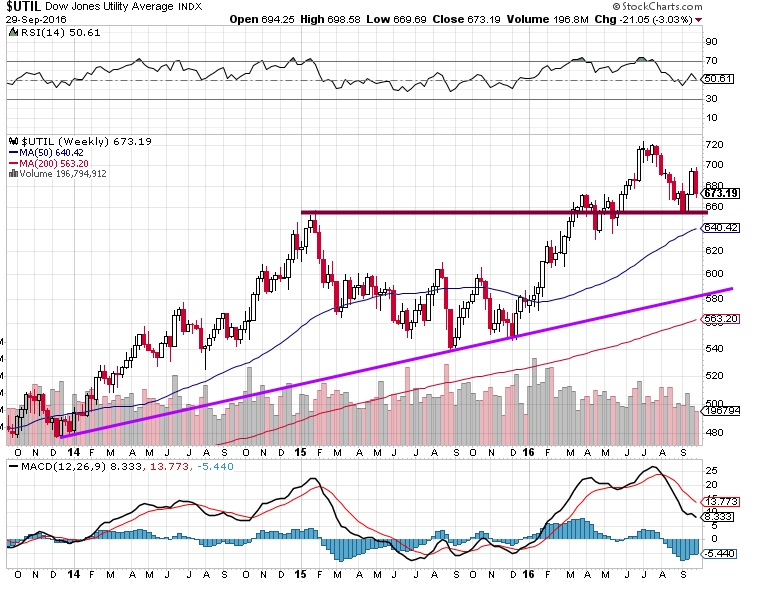
Introduction to Example Investment Portfolio Diversification In the world of investing, the age-old adage "don't put all your eggs in ...